
Elevation: 839 feet
Prominence: 144 feet
Isolation: 0.29 miles
Summit coordinates: 42° 16′ 47″ N, 72° 37′ 14″ W
Town: Holyoke, Massachusetts
Conservation Area: Mount Tom State Reservation
Links:
Mount Nonotuck on Peakbagger
Mount Nonotuck on ListsofJohn
Mount Tom State Reservation website (including trail map)
Eyrie House Ruins Self-Guided Tour (including historical information and map)
New England Trail, Section 6
Mount Tom North Trailhead Park
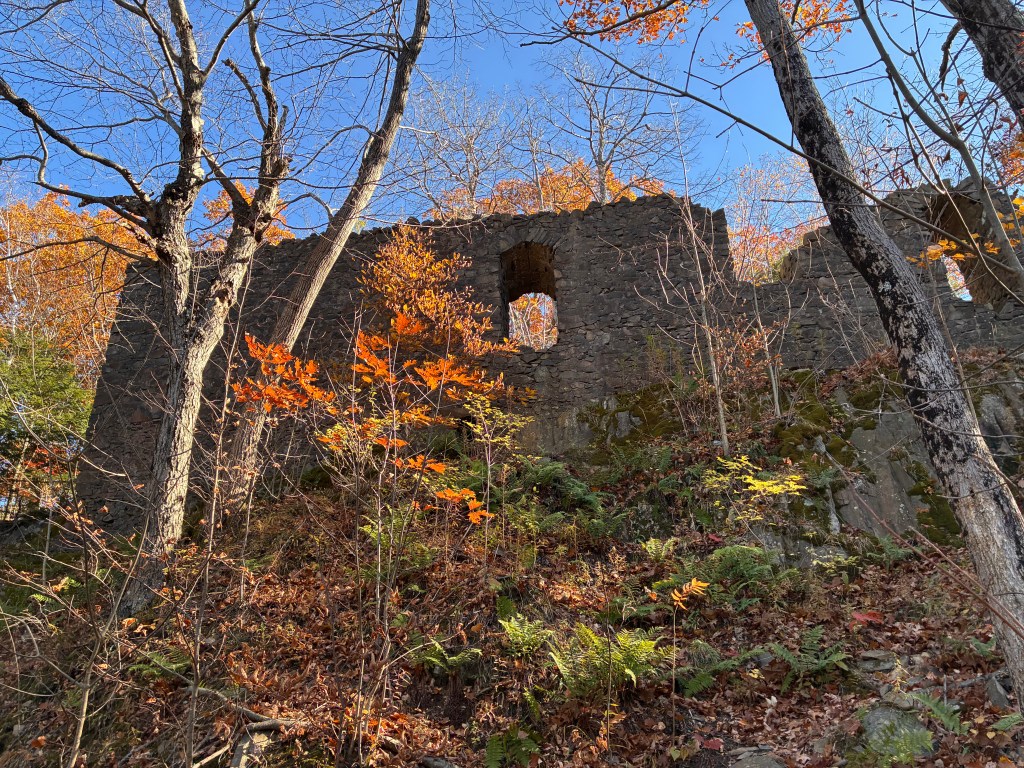
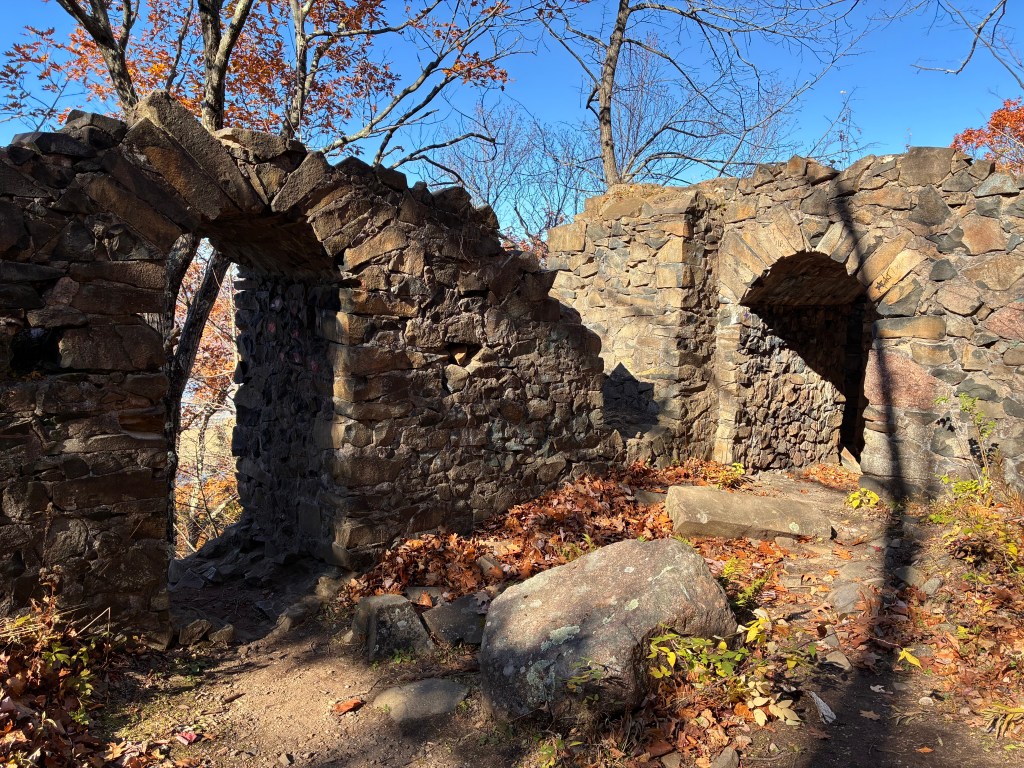
General info: Mount Nonotuck forms the northernmost summit of the Mount Tom Range, overlooking the Connecticut River Valley near the cities of Holyoke, Easthampton, and Northampton. Although not particularly high, the mountain rises steeply above the surrounding lowlands and offers impressive views of the Connecticut River and its famous Oxbow. Its most distinctive attraction, however, is the fascinating ruins of the Eyrie House, a nineteenth-century mountaintop hotel that once rivaled the famous Prospect House on Mount Holyoke. The surviving stone walls, arches, and foundations make Nonotuck one of the most historically interesting summits in Massachusetts.
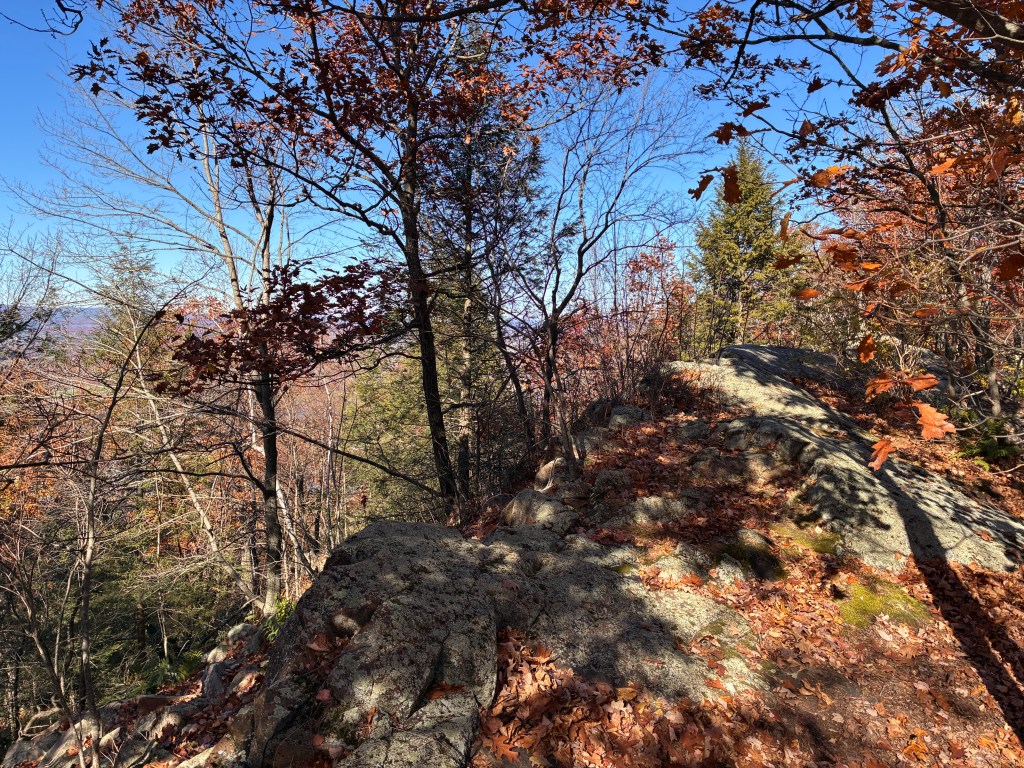
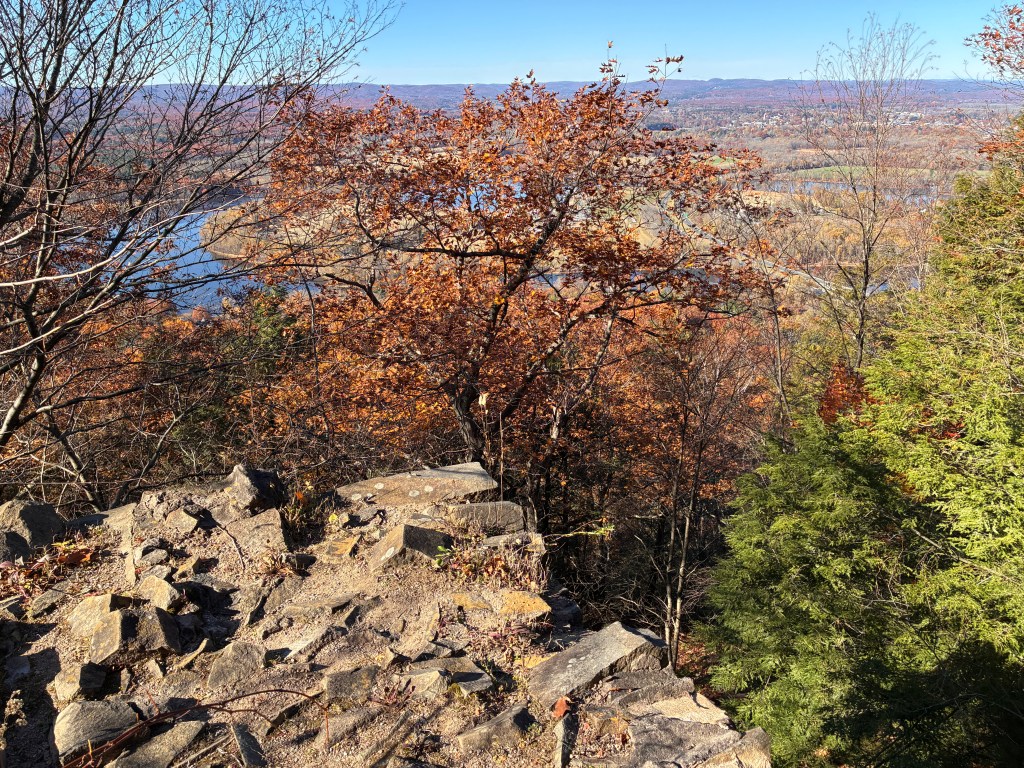
The mountain lies within Mount Tom State Reservation and is accessible by several trails, including the New England National Scenic Trail, formerly the Metacomet–Monadnock Trail. An old carriage road, now closed to automobiles, provides a relatively easy approach to the summit area, while more challenging trails connect Nonotuck with neighboring Dry Knoll and Goat Peak. Although much of the summit is now forested, an overlook near the hotel ruins provides a fine view of the Connecticut River Valley, particularly in seasons when the trees are bare.
Historical background: Mount Nonotuck has a fascinating history closely connected with the nineteenth-century enthusiasm for mountain scenery and tourism. The mountain received its present name in 1858 through the efforts of Edward Hitchcock, the distinguished geologist and former president of Amherst College, who named several prominent peaks in the Connecticut River Valley. On June 17, 1858, approximately 500 people gathered at the summit for an elaborate naming ceremony attended by prominent local figures, including Hitchcock and his successor as president of Amherst College, William Augustus Stearns. During the ceremony, Hitchcock reportedly scattered fragments of stones collected from around the world, symbolically connecting the mountain with distant landscapes.
The following year, entrepreneur William Street began developing plans for a mountaintop resort. His Eyrie House, named for the lofty nesting place of an eagle, opened on July 4, 1861. The original three-story hotel contained twelve rooms, including five guestrooms, and offered visitors spectacular views across the Connecticut River Valley. It soon became a popular summer destination.
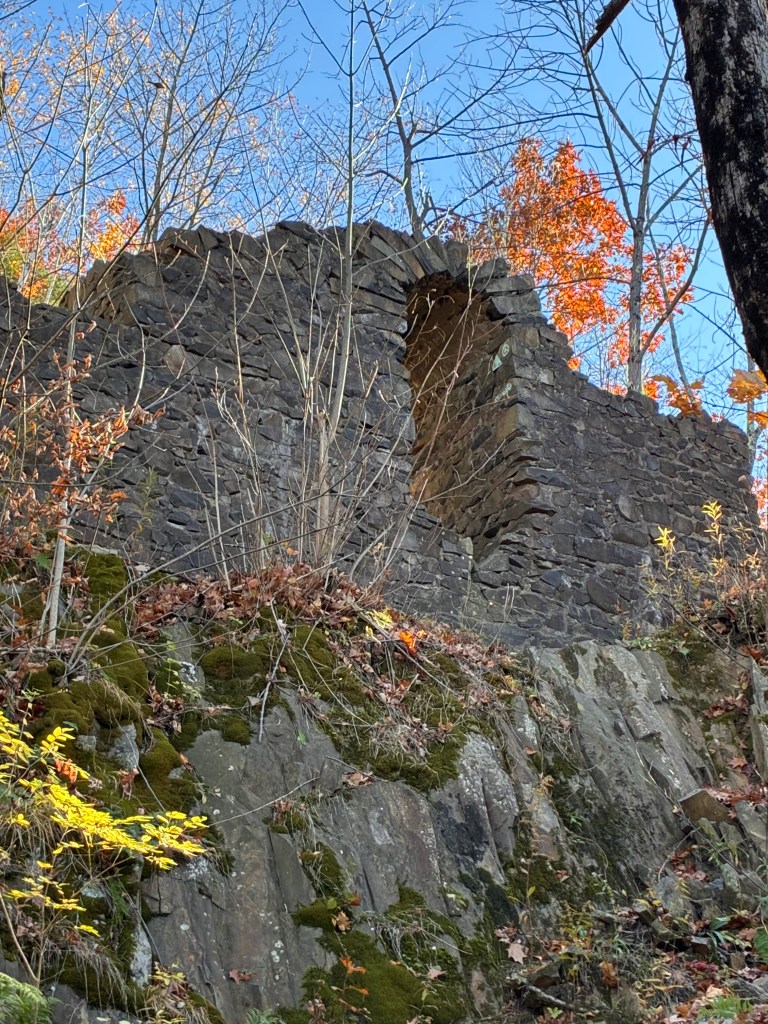
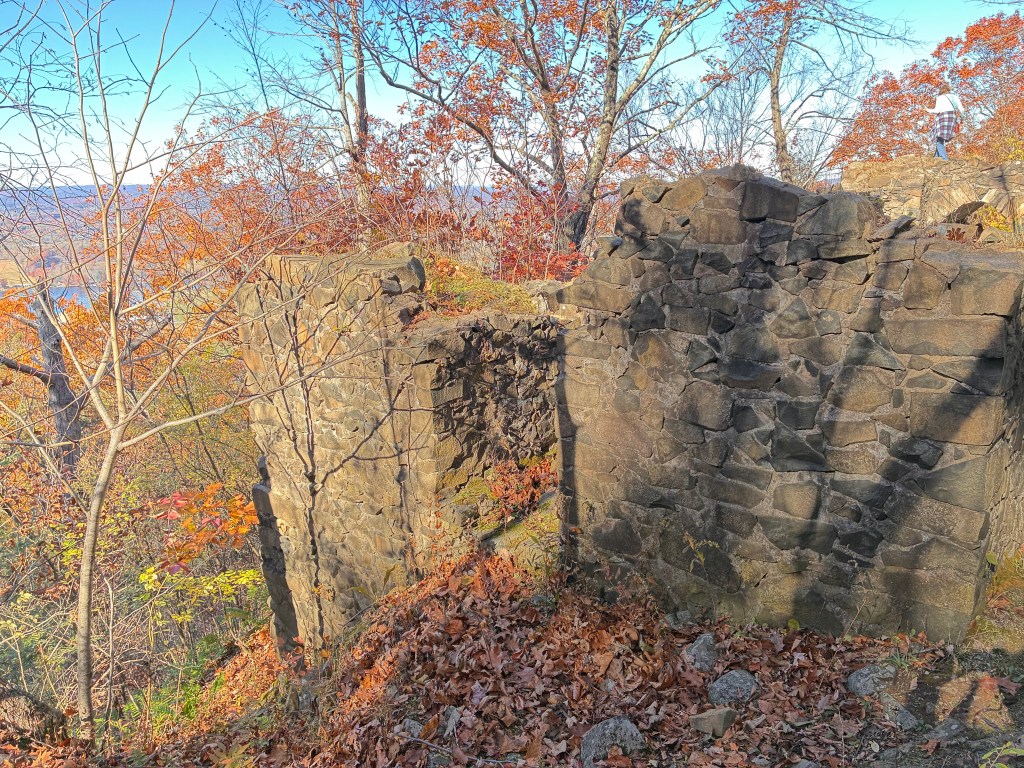
Over the following decades, Street steadily expanded the resort. By 1882, the Eyrie House offered approximately thirty guestrooms, dining rooms, separate parlors for men and women, and numerous recreational attractions. Visitors enjoyed concerts, dancing, picnics, and croquet, while elevated wooden promenades extended around the summit to provide commanding views of the valley. Guests generally reached the hotel by horse-drawn carriage along a winding mountain road. During the 1890s, Street undertook an ambitious expansion, planning a larger stone hotel and an inclined railway to improve access. Construction began on the stone building in 1893, but financial difficulties and growing competition from other regional attractions prevented its completion. These unfinished stone walls are among the most impressive ruins that survive today.
The resort met a dramatic end on April 13, 1901. During the preceding winter, two of Street’s horses had died on the mountain. Unable to bury them in the frozen, rocky ground, he waited until spring and attempted to dispose of their remains by burning them. Although the fire appeared to have subsided, strong winds rekindled the flames, which spread to the wooden promenades and eventually engulfed the hotel. Street tried desperately to save his property, but the Eyrie House was completely destroyed.
In 1903, the Commonwealth established Mount Tom State Reservation and subsequently sought to acquire Street’s mountaintop property. Street resisted the sale, demanding $25,000, while the state offered only $5,000. The land was eventually taken by eminent domain, and Street reportedly refused to accept the compensation. He died in 1918, having lost both his beloved hotel and the mountain property on which he had spent much of his life.
Today, the remains of the Eyrie House are preserved within Mount Tom State Reservation. Visitors can explore the original hotel site. A self-guided interpretive trail (see link above) explains the history of the resort and its surviving features.
Recommended ascent routes: Mount Nonotuck is accessible from several directions, with the easiest approach beginning at the Stone House Visitor Center in Mount Tom State Reservation. For hikers looking for a more ambitious outing, the connecting trails to Dry Knoll and Goat Peak offer some of the finest scenery in the Mount Tom Range. Here are a few suggestions…
Mount Nonotuck Road and Eyrie House Ruins: This is the easiest and most direct route to the summit and an excellent choice for hikers particularly interested in the mountain’s history. Begin at the Stone House Visitor Center parking area and follow Mount Nonotuck Road (also known as Christopher Clark Road), a paved former carriage road now closed to automobiles, approximately 1.2 miles uphill to the Eyrie House interpretive trail. The half-mile walking tour visits the historic hotel grounds, including the impressive stone ruins and a scenic overlook above the Connecticut River. The overall hike is approximately 3 miles round trip with about 430 feet of elevation gain. Much of the ascent is fairly gentle, although the short trails around the ruins are uneven and rocky.
Goat Peak, Dry Knoll, and Mount Nonotuck Loop: This is an excellent hike that combines several scenic summits. Begin at the Stone House Visitor Center and walk a short distance east along Reservation Road to the white-blazed New England Trail. Follow the trail northward as it climbs onto the rocky ridgeline, passing several fine viewpoints before reaching the summit of Goat Peak. Be sure to visit the observation tower. Continue north along the New England Trail, crossing Dry Knoll, another rocky summit with excellent views of the Connecticut River and its famous Oxbow. The trail then continues toward Mount Nonotuck, where a short detour leads to the ruins of the Eyrie House. From Nonotuck, you can return along the New England Trail or follow the old Mount Nonotuck Road back toward the Stone House. If you do the latter, as I did, it is a loop of approximately 3.5 miles with about 700 feet of cumulative elevation gain.
Mount Nonotuck from East Street, Easthampton: An alternative approach begins at Mount Tom North Trailhead Park, located at 96 East Street in Easthampton. Established through a partnership between the city and Kestrel Land Trust, this conservation area provides access to the northern end of Mount Tom State Reservation. Follow the New England Trail southward from the park, climbing through the forest toward the summit of Mount Nonotuck. This approach involves a steeper, more persistent incline than the old carriage road. Roughly 2.5 miles round trip with about 670 feet of elevation gain.


Leave a Reply